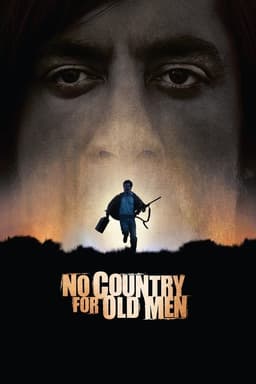
No Country for Old Men
2007 · Film
CrimeThrillerWestern
A neo-Western that looks like a cat-and-mouse thriller but feels like watching the world's moral compass spin wildly before shattering. No Country for Old Men isn't about whether good will triumph—it's about realizing the question itself might be obsolete.
How it feels
Like standing in an empty church after everyone has left, hearing only your own footsteps echo. The film builds tension methodically, then refuses to release it in ways you expect. Instead of catharsis, you get the unsettling sense that you've witnessed something fundamental break down—not just in the story, but in the rules of storytelling itself. It sits heavy in your chest, questioning whether justice, meaning, or even narrative closure still exist in this world.
What makes it heavy
The violence arrives with surgical precision and disturbing casualness. More unsettling than the brutality is the film's suggestion that evil doesn't need motivation, explanation, or even acknowledgment—it simply is. Characters you care about vanish from the story without ceremony. The ending doesn't resolve; it contemplates. You're left holding questions the film never intended to answer.
Compared to shows you may know
-Fargo → Both feature unstoppable killers in stark landscapes, but this one offers no dark humor to soften the blow.
-Breaking Bad → Where that series shows consequences building, this one shows them already inevitable.
-True Detective → Both explore nihilistic philosophy, but this one doesn't dress it up as mystery.
-The Sopranos → Both question moral certainty, but this one provides no family warmth to anchor you.
If Heat felt like a perfectly orchestrated crime symphony, No Country for Old Men feels like hearing that same orchestra tune their instruments and then walking away
Worth knowing
The violence, while brief, is deeply unsettling—methodical rather than explosive. Those who find meaning in narrative closure or poetic justice may feel genuinely unsatisfied, which is entirely intentional.