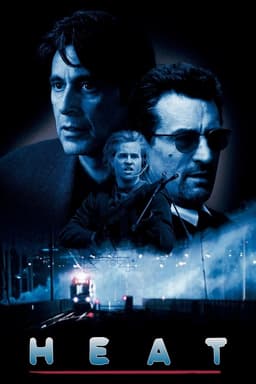
Heat
1995 · Film
CrimeDramaAction
Heat looks like a cops-and-robbers thriller, but it's actually a meditation on what happens when work becomes your entire identity. This is Michael Mann at his most patient and precise, building toward inevitable collision.
How it feels
Watching Heat feels like being pulled into two gravitational fields at once. The film creates this strange intimacy with both hunter and hunted, making you invested in characters who are fundamentally on a collision course. There's a weight to every conversation, every glance across a crime scene, every moment of downtime between the action. It's methodical without being slow, building tension through character rather than plot mechanics.
What makes it heavy
The emotional center isn't the heist sequences—it's the recognition that these men have sacrificed everything human for their professional obsessions. Both McCauley and Hanna are masters of their craft who can't exist outside of it. The film doesn't judge this choice, but it shows you the cost with unflinching clarity. When violence comes, it feels both inevitable and tragic.
Compared to shows you may know
-The Dark Knight → Where that film uses its cat-and-mouse game to explore chaos versus order, this one examines the loneliness of expertise.
-Collateral → Both are nocturnal Los Angeles stories, but this one feels like destiny rather than accident.
-Breaking Bad → Where that show charts moral descent, this one starts with men already fully committed to their paths.
-True Detective → Both explore obsession consuming identity, but this one finds poetry in professionalism rather than philosophy.
If The Departed felt like identity crisis, this feels like identity clarity taken to its logical extreme
Worth knowing
The violence, when it comes, is sudden and consequential. Those sensitive to lengthy character studies might find the three-hour runtime challenging, though it earns every minute.