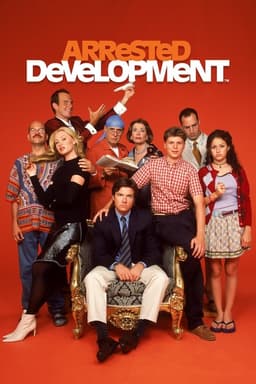
Arrested Development
2003 · TV Series
Comedy
Arrested Development looks like a lighthearted family sitcom, but it's actually a relentlessly clever dissection of dysfunction disguised as slapstick. What appears to be simple comedy reveals itself as an intricate puzzle box of running gags, character flaws, and escalating absurdity that rewards obsessive attention.
How it feels
Watching feels like being the only sane person at a family reunion where everyone else is performatively insane. The comedy builds through repetition and callbacks rather than punchlines, creating a uniquely satisfying rhythm where every rewatch reveals new layers. It's intellectually rewarding in a way that makes you feel complicit in the characters' terrible decisions.
What makes it work
The show operates on multiple levels of irony simultaneously. Characters consistently fail to learn from their mistakes, creating a feedback loop of escalating poor choices that somehow becomes more endearing than frustrating. The writing assumes you're paying attention and remembers everything, even when the characters don't.
Compared to shows you may know
-The Office → Where that show finds heart in workplace awkwardness, this finds absurdist poetry in family selfishness.
-Seinfeld → Both feature terrible people, but this one makes their awfulness into an art form.
-Community → Similar meta-humor and callbacks, but this one never breaks character to wink at you.
-It's Always Sunny → Where that show revels in chaos, this one architects it with surgical precision.
If The Office felt like watching people you might know, this feels like watching people you're grateful you don't
Worth knowing
The humor is dense and referential—missing episodes makes later jokes incomprehensible. Characters are uniformly selfish and rarely grow, which some find exhausting over time.